

Grant Reaves' Wacky World of Industrial

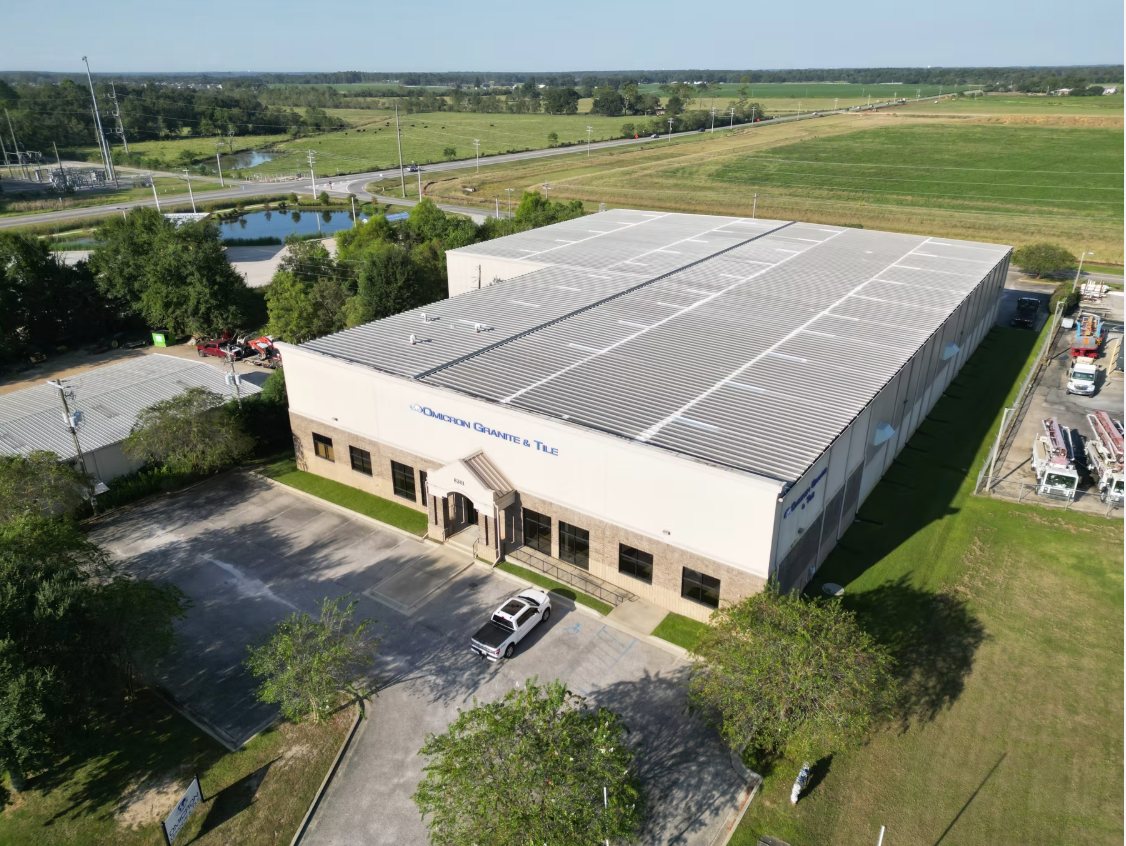
Grant Reaves seems endlessly amused by the eclectic tenants drawn to the properties in his firm’s portfolio. Chicken processing giant Tyson Foods leased one of their units and turned it into a food safety lab. A couple of women, with no megacorp might behind them, rent another unit and use it to store, photograph, and package clothes for their e-commerce boutique. The ICEE Company, makers of famed frozen, carbonated convenience store treats, use multiple units across Stoic Equity Partners’ buildings. So does Terminix, the famous pest control business.
Hot tub salespeople and HVAC technicians. Mom and pop shops and multinational logistics companies. They all need the type of flex industrial space Stoic specializes in – 30,000 to 50,000 square foot structures split into rental units that blend offices at the front with warehouses and truck loading bays at the back. That stable, diverse demand, Reaves explains, is just one of the factors that make Stoic’s strategy for acquiring and rehabbing these properties so profitable.
But for all his current enthusiasm for this often forgotten asset class, Reaves admits that it’s a world away from the big, conventional projects, like hotel (re)developments, he gravitated towards early in his real estate career. A series of shocks and setbacks, however, forced him to reevaluate his approach. Pivoting through upheaval alongside his Stoic co-founder, Jeremy Friedman, he gradually developed a set of values that led him to his “class B industrial” niche:
Pragmatism. Humility. Stoicism.
--
In retrospect, Reaves’s entire career has been one big, pragmatic pivot.
It all started in 2013, when he dropped out of college. “I was not doing well there,” he tells GPLetters. “My parents were like, ‘It’s time for you to come home.’ And the school was like, ‘Okay, we’re happy to see you go.’”
Coming from an entrepreneurial family, he’d grown up planning to go into the business world as well. But without a college degree, he knew he’d have a hard time getting his foot in the door. The best path he could envision was to find some sort of entry-level sales job and work his way up from there. He just wasn’t sure what sort of sales role would be best. While mulling over his options, he found a gig doing maintenance work for a homebuilder in southern Alabama, near his parents’ home. The builder’s wife, a residential real estate agent who took an interest in his conundrum, suggested he ought to try selling houses too. Well, he figured, it was worth a shot.
So he got a brokerage license and started selling homes as a Keller Williams agent. He was not a good fit for the role. Prospective homebuyers in their 40s didn’t think much of his advice, as a 21-year-old kid who’d never bought a house. Meanwhile he, a utilitarian numbers guy, got frustrated by the deeply personal and emotional decision-making that often guide laypeople’s homebuying decisions. But unlike other brokers who decide the gig isn’t working out, Reaves didn’t have a “normal job” to fall back on. “So I was like, ‘Well, I’m gonna have to just push through and figure this out,’” he recalls. “That perspective’s helped me a lot over the years.”
In 2014, six months after acquiring his license, he moved from Keller Williams to Bellator, a regional brokerage firm that did a little bit of everything, including more numbers-driven commercial deals. Reaves like the size of those projects – the thrill of working with millions of dollars. His boss at Bellator had recently realized that bigger national brokerage first handled most of the hotel and hospitality deals in their area, but didn’t know the market well. He wanted to try leveraging their expertise and contacts, as a regional firm, to break into that space. So he made Reaves an offer: The kid could try his hand at initial outreach, learn how to do cold calls. If he managed to get some traction, then he could collaborate on the deal.
The play worked, and Reaves quickly developed a mini-specialization in hospitality, buying and selling Comfort Suites and Hampton Inns. In 2018, he shifted to Marcus & Millichap, both because he wanted to climb the ranks, work on bigger deals – and because he knew that if he stayed at Bellator he’d be too tempted to keep trying new things. At a national firm, he figured, he’d have an easier time cultivating a specialization, while learning more about deal structures.
Although successful, he never fully warmed to the life of a broker. He didn’t want to chase sale after sale. He wanted to build something enduring. An asset. A company. Maybe both.
As early as 2014, he’d considered shifting from brokerage into development. But he “kind of got talked out of it by people who had just gone through the Global Financial Crisis (GFC) and seen a bunch of developers get their teeth kicked in,” he says. “Especially down here … it was just the Wild West of people blowing through and flipping contracts. They made a ton of money [in the aughts]. And then they all went bankrupt” within the space of a few months.
Instead, following a friend’s lead, he got into commodities trading, managing about $150,000 in friends and family members’ money, and started reading up on finance. Through practice, online classes, and a steady diet of real estate podcasts and videos, he learned how to craft a plan and attract investors. And in 2019, he looking for a hotel to buy and redevelop all on his own. It’d be the first step in his plan to rapidly build out a massive hospitality portfolio.
He describes his early mindset as, “Buy everything that makes sense … Just grow, grow, grow.”
By early 2020, he’d settled on a Candlewood Suites in Georgia, and was closing in on a deal.
Then COVID hit America. Hotels shuttered overnight. The hospitality market went topsy-turvy.
--
In retrospect, Reaves says, he could’ve pulled the trigger on that deal and come out ahead on the other side of the pandemic. “But I was like, ‘Man, I don’t need to get into a market that is completely upended. I’ve never done a deal on my own before.’”
So he pivoted, looking for anything else that’d make sense, on paper at least, to buy, renovate, and sell. A small multifamily complex in his area looked interesting, but he wasn’t sure how much it’d cost to rip out and replace all the HVAC systems. So he called Friedman.
Reaves met Friedman at Bellator, where they were both early-career brokers. But Friedman, 18 years his senior, had a prior career as an institutional bond broker and a home builder. “He’s still one of those guys that you can ask, ‘How much would it cost to put a wall here,’ and he can give you a number,” Reaves says. “It’s not a perfect number. But it’s usually a pretty close one.”
Always game to help a friend and colleague, Friedman answered a few of Reaves’s questions before stopping him to ask, What is it that you’re working on exactly? And after hearing him out, Reaves recalls, “he said, ‘Look at this other deal I have instead. It’s bigger and cooler.’”
He’d found an old grocery store, which had shuttered during the Global Financial Crisis. A few years ago, another developer had repurposed it into office space, currently leased by a health care company. “The original play was this,” Reaves explains: “They had two years left on their lease, and they were paying really low rents. We’d just get the building under contract, renegotiate the lease, and then flip it for an 8 cap. We’d never actually have to raise any money, or do anything other than restructure the deal. But we’d make a good chunk of money.”
The numbers made sense. But more than that, Reaves liked the idea of partnering up with Friedman. In business, they have radically different skills and temperaments. Reaves knows the financial side of real estate well and likes to move fast. Friedman knows more about the nitty-gritty of building and managing a property, and he likes to scrutinize every deal and document. But “overall, we are very similar personalities,” Reaves believes. “Like, we go to a new restaurant and we’re gonna end up ordering the same thing every time, without fail.”
They could complement and balance each other, they figured. Reaves could manage the acquisition, investor relations, and debt management side of this venture and others in the future. Friedman could get into the weeds on legal affairs and project management details. So they decided to execute the deal – and formed the seeds of Stoic Equity Partners in the process.
Then the healthcare company realized this whole pandemic work-from-home thing might be a long-term reality. So they decided that they would not be renewing their lease after all.
--
Rather than give up on their burgeoning partnership, Reaves and Friedman brainstormed new opportunities worth chasing together – and in the process honed their vision, functionally fusing Reave’s ambitious growth mindset with Friedman’s fine-tuned analytic approach:
They decided that they didn’t want to compete, as newcomers, in known hot markets. The deals might be flashy, but in practice they’d struggle to make a margin on anything. Instead, they’d leverage their regional broker knowledge to identify dynamic areas within sleepier parts of the southeast. And rather than chase down any opportunity that seemed promising, they’d focus on one truly promising type of structure at a time. Preferably, assets resilient to shocks like COVID.
Fast population growth meant that demand for housing was already high across the southeast, and COVID-era urban flight was set to drive it up even higher. But they weren’t eager to wade into that crowded market. So they’d build something parallel to that growth: self-storage units.
It took a while to find the right buildings, proximate to promising high-growth areas. But by now the pair were pros at the subtle art of slowly, methodically pushing through to solutions. They named their company Stoic to reflect their devotion to that resilient, persistent mindset. (And because they didn’t want to name a company they hope will outlive them after themselves.)
“We’ve had to work really hard through some complex issues with, like, easement subdivision problems,” Reaves explains. “They took a long time. There are other people that are like, ‘Oh, that’s a pain to deal with so I’m just not gonna deal with it.’ But we have. And that’s turned out to be profitable for us… You’ve just got to find a reason and a way to push through the issues without freaking out about them all the time.”
By late 2021 the pair had started refurbishing, repurposing, and in some cases building from the ground up a series of well-targeted storage facilities. They even circled back to that abandoned grocery store, turning it into a few hundred storage units open for business by early 2022.
But they were hardly the only developers working on self-storage projects. As newcomers to the scene, the duo suspected they wouldn’t be able to scale fast enough to stay competitive as the niche heated up. So they kept an eye out for promising new plays. And when a flex industrial space in Ridgeland, Mississippi, crossed their radar a few months into 2022, they pounced on it.
They’d discussed flex industrial opportunities in their brainstorms. Through casual conversations with contractors, they’d recognized a real hunger for blended office-warehouse space. That demand, they believed, would only expand thanks to both regional growth and the wider push to onshore manufacturing across the US. The potential tenant base was broad enough that a downturn in one sector wouldn’t make or break a facility’s viability. Even a pandemic-style system-wide shock probably wouldn’t sink them, as companies large and small always need a base to store and manage their inventory. Yet rents in existing facilities were so low – in some cases just $3 or $4 per square foot – that new construction wasn’t economically viable.
Tucked away out of site and often trading hands off-market, these buildings are by design a bit obscure. But after that chance deal in Ridgeland helped them tune into the niche, Reaves and Friedland started to recognize opportunities everywhere. Plenty of builder-owners wanted to offload structures from the 1980s or ‘90s for between $65 and $95 per square foot, well below $140 to $160 new construction costs. Most of these properties put more focus on office space than warehouses, reflecting outdated tenant needs. But Stoic could simply rip out and relocate some walls while taking care of other relatively low-cost deferred maintenance renovations, like replacing old roofs repairs, retooling office-warehouse ratios to meet current demand. Then they could raise rents to reflect those improvements, towards $9 to $12 per square foot.
Most of the buildings the duo identified came with existing tenants, often with long leases, so it’d take a little longer to bring rates up across the board than it would in, say, an apartment complex. But with 10 to 30 tenants per building, a couple underperforming or empty units wouldn’t hurt. And demand was so high that they could selectively bring in new tenants willing to pay for property taxes, insurance, and common space maintenance on top of their rent.
This strategy quickly became Stoic’s bread and butter. It’s fueled their expansion from a small firm fueling deals with friends-and-family checks as small as $50,000, to a shop capable of attracting multi-million checks from family offices and operating its own funds. By late 2023, around the same time Stoic launched its first $25 million flex industrial-focused fund, Reaves felt secure enough to step away from his brokerage career, which he’d kept up on the side as a source of supplemental income and a fallback option. As of mid-2026, Reaves told GPLetters, Stoic has completed 28 deals, covering $170 million in assets and 7 million square feet. And Reaves says they’re getting more ambitious, moving from a focus on $7 to $15 million spaces towards efforts to acquire $15 to $25 million flex industrial office parks. Big deals are still cool.
But Reaves is quick to point out that he’s no genius. If he could recognize the potential in flex industrial, he argues, so can anyone. The main thing stopping other developers from making the same play before him, he suspects, was inertia. “People knew this arbitrage existed,” he stresses, “but they were like, ‘Well, I’m a multifamily guy. So I’m gonna stay in multifamily.’”
Over the last year, however, he’s seen more and more developers across the nation branching out into flex industrial, some of them even considering new construction on the expectation that they might be able to get (in his markets at least) economically viable $15 per square foot rents. (Reaves sometimes quips that, clearly, he’s shared too many of his secrets on podcasts. But he quickly demurs, claiming he’s not important enough to shape market-wide strategies.)
Reaves isn’t worried about emerging competition, though. Stoic expected it from the outset. More people pursuing the same strategy just makes it easier to up rents, he argues, as they won’t be a high-end outlier. And with their rents, Stoic can still undercut new construction for a while yet. In a few years, the niche might get so hot that their strategy stops working as well as it does. But Stoic always planned to sell eventually. Stoic’s second fund, launched in the spring of 2025, is structured around a four to six-year hold period, and as of 2026 the firm has shifted its focus from acquisition to portfolio management as it starts to exit out of its first properties.
“We’ll stay in this space as long as we can find deals that make sense,” Reaves explains. After all, he and his team have put in the work to master this corner of their market. But he’s vowed not to let pride and inertia get the best of him. Once the rides start to turn on their flex industrial strategy, he says, they’ll pivot to some new pragmatic play. It’s a little early to predict what that play might be. Suffice it to say they’ll grind through whatever they need to in order to succeed.
That’s the Stoic mindset.